

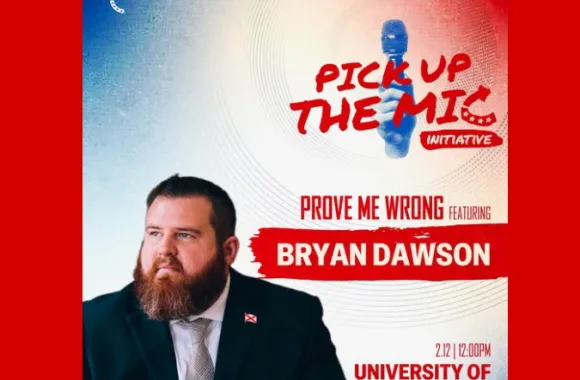
The University of Montevallo found itself in the middle of a tense debate after a conservative speaker’s campus appearance was postponed following threats and a student walkout. Administrators cited safety concerns when they delayed the original date, and the student group behind the event moved it to mid-February. The situation quickly became a flashpoint for broader discussions about campus speech and security.
Campus Reaction
Students and organizers reacted in strong, visible ways, including a walkout that underscored how divided the campus felt. Some students said the presence of a polarizing guest made them unsafe or uncomfortable, while others argued the delay was an infringement on free expression. Those tensions played out in public forums, social media chatter, and conversations in residence halls and classrooms.
The student organization that hosted the event described it as a “Change My Mind”-style conversation, a format that aims for dialogue but often draws intense attention. Organizers insisted they moved the date only to address logistical and safety issues, not to back down from inviting a controversial voice. That claim did little to quiet critics who saw the reschedule as a symbol of larger problems on campus.
Administrators framed the postponement as a precaution, pointing to credible threats and the need to protect everyone involved. In environments where safety is at stake, universities often face pressure to act swiftly and visibly. Those actions are rarely neutral in public perception, though, and decisions framed as protective can be read as suppressive.
Meanwhile, some faculty and outside observers suggested the episode reflects a national pattern: colleges balancing open discourse with physical and emotional safety. Campus leaders increasingly confront this exact tension, having to choose between enabling robust debate and preventing harm. The Montevallo case is a small example of a recurring institutional dilemma.
Balancing Safety And Free Speech
Finding a principled path through these incidents requires clarity about what counts as a threat and what counts as protest. Threats that endanger people or property demand immediate and decisive responses; protests that aim to express opposition should be handled with policies that protect speech on both sides. Too often, universities lack transparent protocols that students trust, which fuels second-guessing and rumor.
Some student activists argued for stronger guarantees for speaker safety and audience participation so events could proceed without interruption. Others pushed for clearer codes governing protests, emphasizing the right to dissent in peaceful, non-disruptive ways. Both perspectives spotlight gaps in planning: security measures and communication strategies that fail under public pressure.
Looking ahead, colleges can learn from incidents like this by setting clear expectations well before controversial events are announced. That includes pre-planned security assessments, neutral communication to the campus community, and explicit rules for protests that protect the rights of speakers and demonstrators. When those pieces are missing, reactive decisions replace thoughtful policy.
The Montevallo episode also highlights the emotional stakes for students who feel threatened by rhetoric and those who feel shut out when a viewpoint is delayed or canceled. Both feelings are legitimate and deserve a response that recognizes the human cost of controversy. Crafting policies that account for those costs will test leadership, empathy, and procedural fairness.
At the end of the day, the rescheduled event and the responses around it make a simple point: campus life will continue to be the battleground for public debate. How colleges choose to manage those battles will shape not just single events but the culture of discourse for years to come. The challenge for Montevallo and institutions like it is to keep dialogue alive while keeping people safe.