

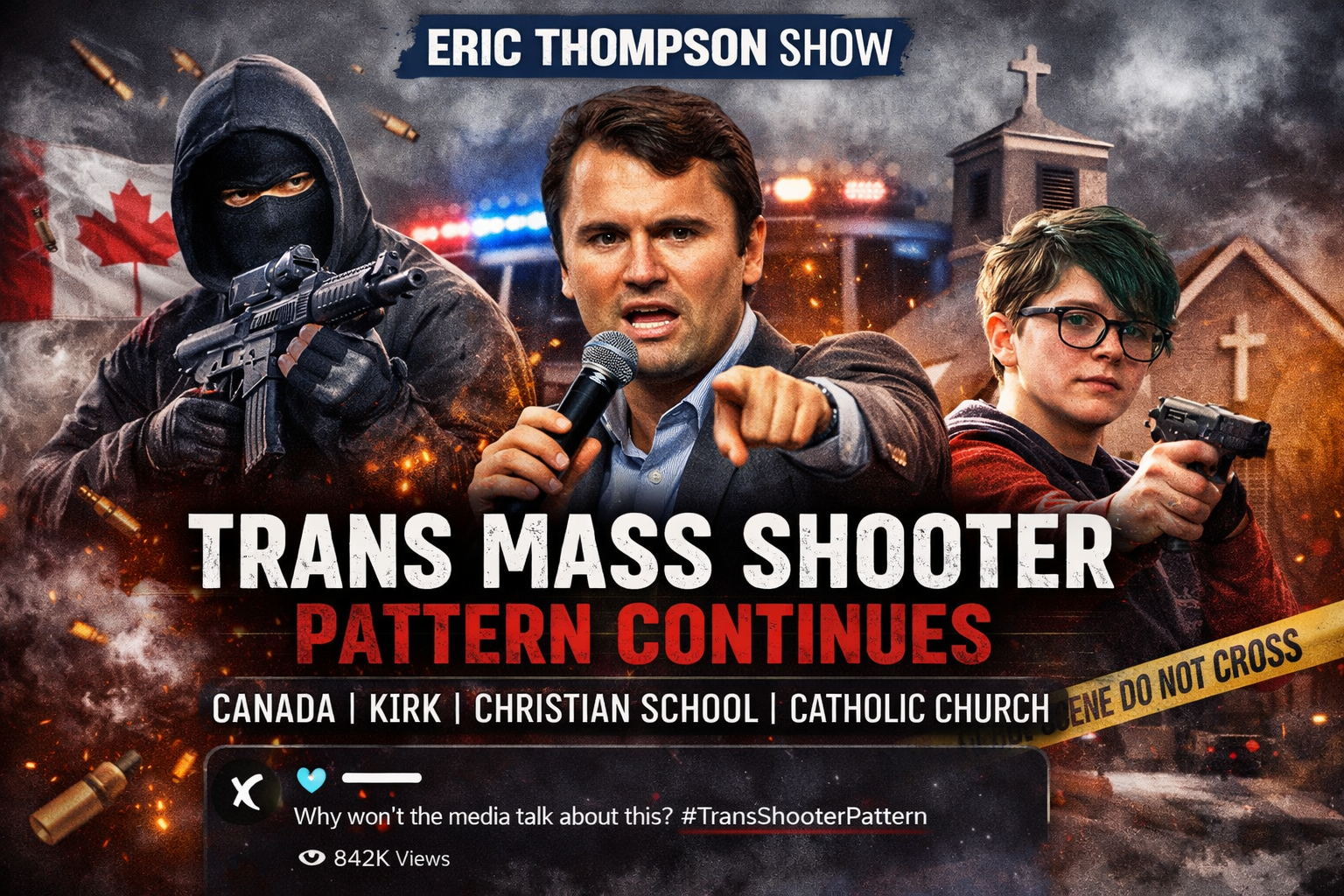
Trans Mass Shooter Pattern Continues: Canada, Kirk, US Christian School, and Catholic Church
A series of recent violent incidents in North America has ignited renewed debate over whether a troubling pattern is emerging among certain mass shooters — and whether mainstream media outlets are deliberately downplaying key details.
In February, a shooting in Canada involving a suspect who reportedly identified as transgender drew significant attention across alternative media platforms. The suspect’s background and online activity became central to the developing story, particularly after social media users uncovered posts suggesting ideological hostility toward religious institutions.
Shortly thereafter, violence connected to a Christian school in the United States intensified scrutiny. According to reporting from The Gateway Pundit, observers pointed to similarities in ideological motivations expressed online prior to the attack. Commentators argued that identity-based grievances and anti-Christian rhetoric were not incidental, but central to understanding motive.
A separate case involving a Catholic church further fueled public concern. Witnesses described deliberate targeting of a house of worship, and online discussions quickly focused on whether anti-religious hostility was a contributing factor. Conservative analysts argued that these incidents reflect a broader cultural current rather than isolated acts.
The debate escalated after opinion writers at New York Post criticized what they described as selective reporting. In a recent column, the paper asserted that media outlets frequently emphasize identity factors in some crimes while omitting them in others. The piece argued that such inconsistency erodes public trust and fosters accusations of narrative manipulation.
Critics of mainstream coverage have highlighted terminology choices. In several cases, early reports avoided reference to gender identity, instead focusing solely on mental health or access to firearms. Conservative commentators contend that when suspects fall into politically sensitive categories, journalists adopt a more cautious tone — one that they say borders on obscuring facts.
Data surrounding mass shootings remains complex. Public crime databases do not consistently track gender identity as a category, making broad statistical conclusions difficult. However, alternative researchers have compiled case-by-case analyses suggesting a recent cluster of high-profile attacks involving individuals identifying as transgender. Supporters of this view argue that dismissing these incidents as random coincidence prevents meaningful investigation into potential ideological drivers.
On X, formerly Twitter, posts questioning media silence amassed hundreds of thousands of views within hours. One widely circulated thread compared headline language across outlets covering different perpetrators. A short video commentary attached to the thread featured side-by-side screenshots, alleging disparity in descriptive framing. The post was shared by several political commentators and generated heated replies.
Another viral X video showed a compilation of news anchors discussing recent shootings without mentioning gender identity. The narrator argued that transparency is essential regardless of political sensitivities. Supporters claimed the video demonstrated systemic avoidance; critics countered that responsible journalism avoids speculation during active investigations.
Eric Thompson, host of The Eric Thompson Show, has publicly argued that consistent reporting standards are essential to restoring credibility in journalism. Writing from a conservative perspective, he has maintained that patterns should be examined openly rather than dismissed out of hand. In his view, selective silence can be as misleading as overt bias.
Law enforcement officials in the recent cases have generally emphasized motive investigation over identity politics. Police statements have typically referenced manifestos, online postings, and behavioral warning signs. Authorities have not, at this stage, declared a coordinated ideological movement behind the incidents. Even so, analysts note that extremist subcultures often incubate online long before formal recognition by investigators.
Sociologists caution that while individual perpetrators may share certain characteristics, mass violence historically spans diverse demographic categories. The majority of violent crime in the United States is not committed by any single identity group. However, commentators arguing for closer scrutiny insist that acknowledging emerging trends does not equate to broad condemnation of entire communities.
The broader political tension reflects deeper cultural divisions. For conservatives, the issue centers on equal application of standards: if identity is relevant in some narratives, they argue, it should be relevant in all. They contend that shielding certain aspects from public discussion fuels suspicion and polarization. Progressive voices, meanwhile, warn that emphasizing identity risks stigmatizing vulnerable populations.
Recent weeks have seen increasing calls for congressional hearings into domestic extremism across ideological lines. Some lawmakers have proposed examining online radicalization pathways that transcend traditional partisan boundaries. Others caution that legislative overreach could threaten civil liberties.
The intensity of the current debate underscores a fundamental question: How should media organizations balance sensitivity with transparency? Trust in American journalism remains historically low, and controversies over reporting choices only deepen skepticism. Whether the incidents in Canada and the United States represent coincidence or correlation, the public conversation surrounding them shows no sign of fading.
As more information becomes available from ongoing investigations, the tension between transparency and caution will continue shaping headlines. For now, the controversy illustrates how rapidly crime, identity, and media framing intersect in the digital age — and how fiercely Americans contest the narrative that follows.