

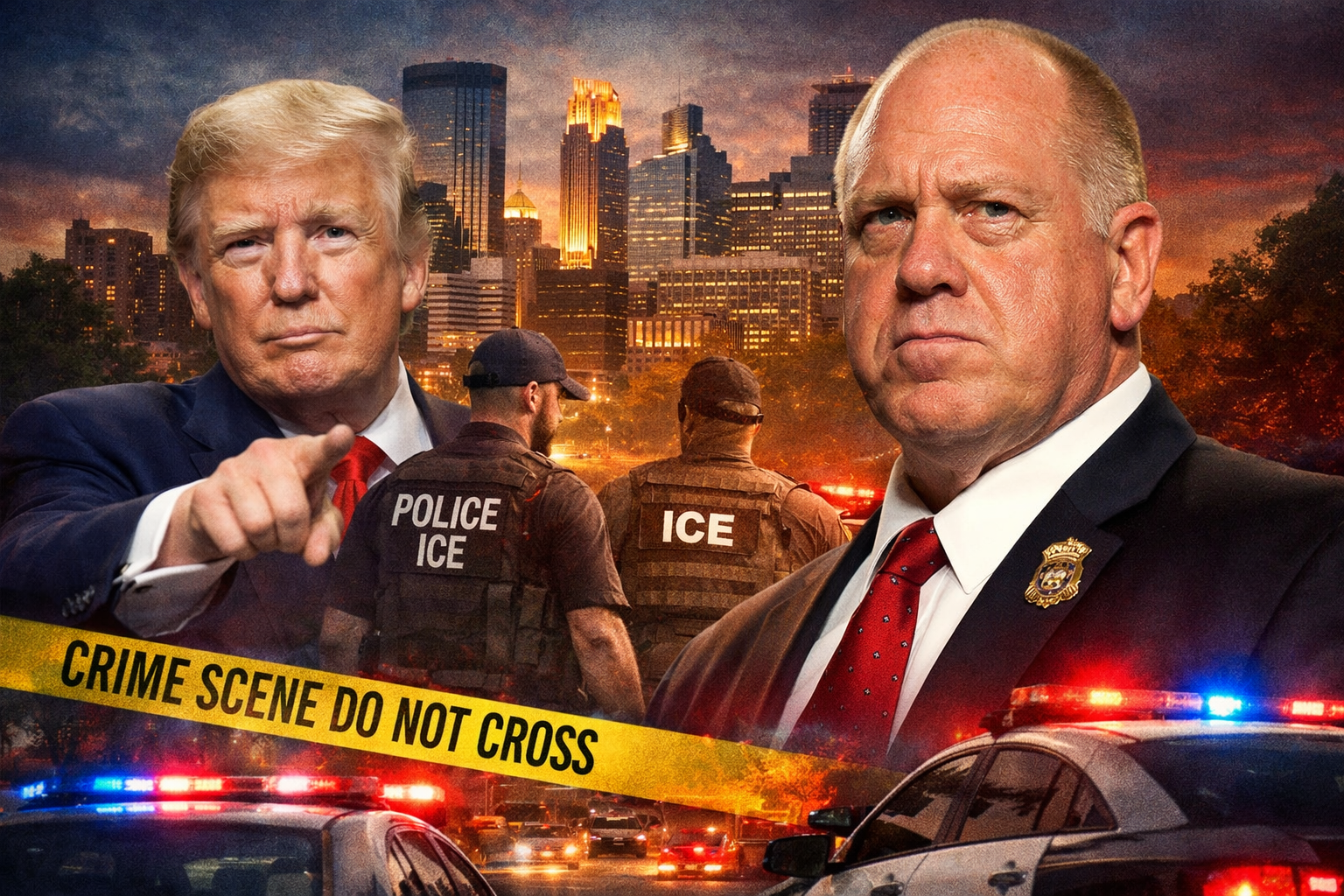
The Trump Administration Dispatches Border Czar to Minnesota Amid Surge, Violence, and Fraud Focus
MINNEAPOLIS, Minn. — In a move underscoring the federal government’s commitment to enforcing immigration law and restoring order in Minnesota, President Donald Trump announced Monday that he is sending White House “border czar” Tom Homan to Minneapolis later this week to oversee Immigration and Customs Enforcement (ICE) operations and related investigations.
The deployment follows weeks of heightened federal enforcement activity under what the Department of Homeland Security (DHS) has described as Operation Metro Surge — a nationwide effort focused on apprehending criminal illegal aliens and bolstering interior immigration enforcement.
In a Truth Social post, President Trump touted Homan’s reputation, saying, “He has not been involved in that area, but knows and likes many of the people there. Tom is tough but fair, and will report directly to me.”
Trump sending border czar Tom Homan to Minnesota (ABC News)
Homan’s Mission: Enforcement and Fraud Investigations
White House press secretary Karolinee Leavitt confirmed Homan’s assignment will include oversight of ICE field operations in the Minneapolis–Saint Paul area — where the federal presence has swelled to thousands of agents — and coordination with authorities probing extensive welfare fraud.
The fraud element has drawn attention from conservative lawmakers and commentators who argue that widespread misuse of taxpayer funds erodes public trust and contributes to broader chaos in communities hosting large immigrant populations. The fraud hearings on Capitol Hill, including examinations of potential systemic abuses in Minnesota and Maine, add another layer of scrutiny.
Representatives involved in those hearings have stressed long-standing allegations that failures by state leadership permitted large scale fraud to flourish — a subject resonating with many Republicans advocating for stronger oversight.
Toxic Backdrop: Shootings and Local Response
The decision to send Homan comes amid intense controversy surrounding two fatal shootings by federal agents in the Minneapolis area in recent weeks — most recently the death of 37-year-old Alex Pretti, a registered intensive-care nurse who was shot by Border Patrol officers. Video verified by Reuters showed Pretti holding a phone, contradicting initial DHS claims that he threatened agents with a firearm.
Pretti’s death, following the January killing of Renée Good, also 37, by an ICE agent, has prompted widespread protest in Minneapolis and national debate about federal enforcement operations.
Local officials, including Democratic Governor Tim Walz, have called on the federal government to withdraw agents and end the surge altogether — but the Trump administration has resisted such calls, framing the mission as vital to public safety and immigration law enforcement.
Federal Court Action Adds Legal Pressure
While federal forces remain deployed, legal challenges are advancing quickly. On Monday, U.S. District Judge Katherine Menendez weighed arguments over whether to temporarily halt the federal crackdown. Lawyers for Minnesota argue the surge’s large force of federal agents exceeds anything previously seen and raise constitutional questions about state sovereignty and civil liberties.
In a related development, Magistrate Judge Eric Tostrud issued a restraining order requiring the preservation of all evidence linked to Pretti’s fatal encounter to ensure transparency as investigations proceed.
Political Repercussions: Funding Standoffs and Broader Debate
The controversy in Minnesota is reverberating in Washington, where some Senate Democrats have threatened to block further Department of Homeland Security funding. Their position stems from outrage over federal tactics — but could trigger a partial government shutdown if appropriations are not resolved ahead of the Jan. 30 deadline.
Many Republican lawmakers have joined calls for a thorough investigation into Minnesota shooting incidents, emphasizing the need for both accountability and strong border enforcement. Calls for inquiry span the political spectrum, with GOP leaders insisting that objective findings will buttress confidence in federal law enforcement operations.
Conservative Analysis: Law, Order, and Accountability
Legal scholars and immigration policy experts on the right argue that Homan’s deployment signals decisive leadership at a time of intense local pushback and mixed narratives. They emphasize that federal immigration law supersedes local ordinances and that enforcing national law is both lawful and appropriate. Moreover, placing an experienced law enforcement administrator like Homan in charge is seen as a means to unify strategy and restore operational cohesion.
Many pro-enforcement voices also contend that addressing welfare fraud — which conservative analysts estimate involves billions of taxpayer dollars — is integral to a comprehensive approach to immigration policy and public safety.
Community Impact and National Implications
Back in Minnesota, the federal response has disrupted daily life in Minneapolis, complicated relationships between local and federal law enforcement, and shaped political discourse leading into the 2026 election cycle. For many conservatives in the region and across the country, the events in Minnesota have crystallized broader concerns about border policy, federal authority, and community safety.
As Homan prepares to arrive this week, the national debate over federal enforcement, public order, and accountability shows no signs of cooling — and the Minnesota saga may foreshadow how similar disputes are resolved across other states in the months ahead.
🔎 Keywords
-
Tom Homan
-
Minnesota ICE surge
-
Operation Metro Surge
-
Alex Pretti shooting
-
Welfare fraud investigation
-
ICE enforcement leadership
-
Trump immigration policy
-
DHS Minnesota deployment
-
Federal vs state sovereignty