

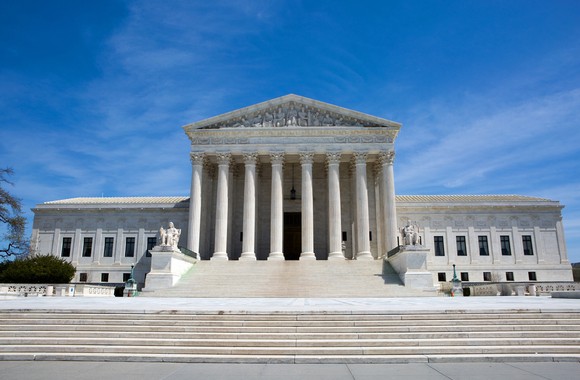
Supreme Court Asked To Decide If Administrative Pressure Counts As Retaliation
A conservative UT Austin finance professor has asked the Supreme Court to take up a case testing when administrative pressure crosses the line into unconstitutional retaliation. He argues that a pattern of threats and chilling conduct by university officials stifled his speech, even though he was not demoted or officially censured. The petition frames the dispute as a core First Amendment clash about whether fear and silence can be treated the same as formal punishment.
The filing describes Professor Richard Lowery as “an outspoken professor” who “has a history of… and it says administrators responded with words and actions that made him think twice before speaking. That language is preserved from the petition to show exactly how the plaintiff characterizes himself and the response he faced. The case turns on whether those kinds of indirect pressures are legally actionable.
What The Petition Argues
At the heart of the petition is a legal question: can an employer retaliate without imposing a traditional employment sanction? The professor says yes, because the threats and public statements chilled his academic speech and academic freedom in practical terms. The petition asks the high court to clarify whether the First Amendment protects faculty from coercive administrative tactics that aim to silence dissent.
The petition presses the idea that speech suppression does not need to wear a formal badge of discipline to be harmful. It argues courts have been inconsistent in requiring a tangible adverse action before finding retaliation, leaving a gap that allows officials to punish in subtler ways. If accepted, the case would force judges to draw a clearer line between protected expression and permissible administrative oversight.
Why The Outcome Matters
A decision either way will ripple across public universities and faculty life. If the court recognizes chilling as retaliation, professors could challenge private warnings, coordinated complaints, or public criticism as unconstitutional restraints on speech. On the other hand, a ruling that demands a concrete employment action could let administrations rely on informal pressure to police campus discourse.
Beyond doctrinal realignment, the case raises practical questions about governance and speech norms. Universities would need clearer policies to prevent officials from using ambiguous threats to shape faculty behavior, while still allowing legitimate oversight of conduct. The balance between institutional order and academic independence will be under fresh scrutiny.
For scholars and administrators alike, the stakes are about more than this one professor’s claims. The court’s approach could either reaffirm a broad shield for academic expression or narrow the kinds of harms that qualify as retaliation. Either result would send a strong message about how much leeway public employers have to influence what employees say.
The petition seeks to compel the high court to resolve a split in legal views and to give colleges a definitive rule to follow. Observers will be watching whether the justices see this as a narrow technical dispute or a chance to set a major precedent on free speech at public institutions. Until the court acts, the question of whether chilling equals retaliation will remain an unsettled and consequential point of constitutional law.