

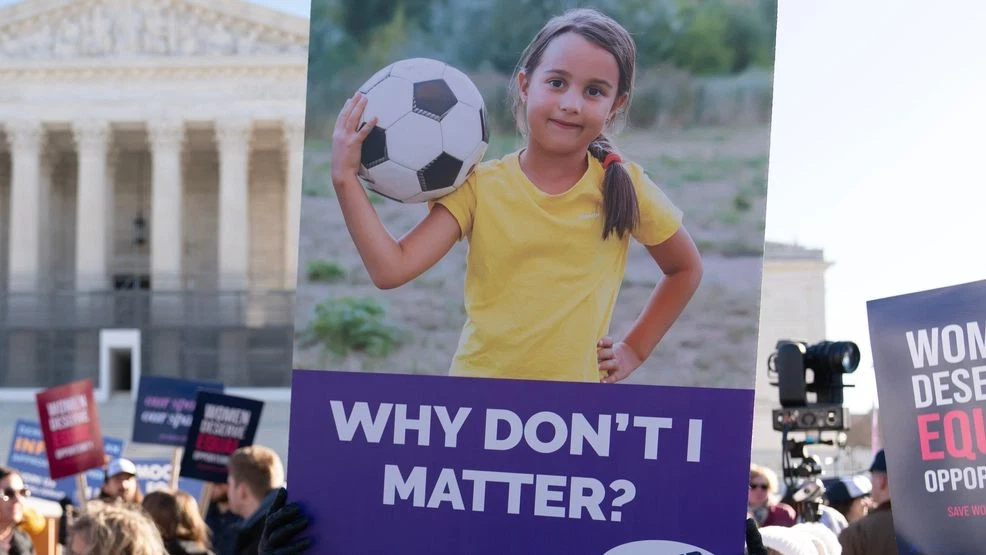
Supreme Court Signals On Women’s Sports
The Supreme Court looks set to uphold laws that protect women’s sports after recent arguments over transgender athlete participation. That shift would reshape how states, schools, and leagues craft eligibility rules. The case raises sharp questions about fairness, privacy, and competitive balance.
The legal fight centers on whether sex-based protections in sports can coexist with broader civil rights claims. Plaintiffs and defendants argued competing ideas about discrimination and sex-based classifications. The justices probed how statutes affect real athletes on the field, not just abstract legal principles.

What’s At Stake
At the heart of the dispute are young athletes who compete in school and college sports. For some, the issue is preserving opportunities for female competitors who have historically faced barriers. For others, the claim is about ensuring equal access for transgender athletes who identify and live as their affirmed gender.
Lower courts have split on how to apply federal civil rights law to team sports. Some judges find that sex-specific categories in athletics are a permissible way to protect competitive fairness. Others emphasize nondiscrimination and the need to treat gender identity as protected under civil rights statutes.
The Supreme Court’s forthcoming decision could set a nationwide rule or allow states to keep their own policies. A ruling favoring the laws that limit transgender participation would give states room to pass or enforce similar measures. Conversely, a decision against those laws could narrow the ways sex-based rules are justified in sports contexts.
Practical consequences would ripple through high school leagues, college conferences, and governing bodies. Athletic associations might revise eligibility standards, testing protocols, or appeals procedures. Coaches, parents, and athletes would need to adapt to whatever legal framework the court endorses.
Advocates for preserving female-only categories argue that physiological differences matter in contact and endurance sports. They say those differences affect safety and competitive integrity. Opponents counter that blanket bans ignore the realities of transition and the diversity of individual experiences.
Medical and scientific testimony has featured heavily in arguments, but it does not answer policy choices for every sport and level of play. Experts differ on how much advantage, if any, remains after hormone therapy. Lawmakers and administrators will likely continue to translate those contested findings into rules.
The Supreme Court’s docket suggests the justices are weighing statutory interpretation and the limits of administrative agency authority. They are also considering how to balance competing rights claims without unduly harming either side. The opinion will be closely parsed for testable standards that lower courts must follow.
Cities and colleges may prepare contingency plans while awaiting the decision. Expect a period of legal and regulatory churn as institutions update handbooks and eligibility criteria. Litigation could continue as new policies meet fresh challenges from students or advocacy groups.
Public reaction is already intense, reflecting broader social debates about identity, inclusion, and fairness. Lawmakers in several states have signaled they will move quickly to codify policies that reflect local views. That patchwork approach could persist unless the court provides a clear national rule.
The case is emblematic of a larger moment when law, science, and cultural values collide. Whatever the outcome, it will shape who competes where and how administrators balance competing rights. For athletes, coaches, and families, the decision will matter in very tangible ways on fields, courts, and tracks across the country.