

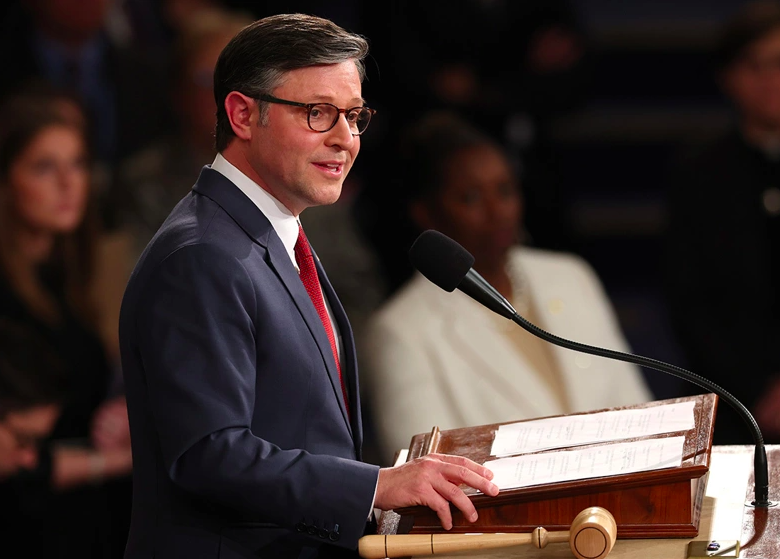
Mike Johnson Replies To Pope Leo XIV: A Biblical Take On Borders
House Speaker Mike Johnson, R-La., has publicly answered concerns raised by Pope Leo XIV about the immigration stance tied to President Donald Trump, and he did so with a clear, compact line that caught attention: “borders are biblical.”
“Borders and walls are biblical,” Johnson, a Southern Baptist, responded. “From the Old Testament to the New, God has allowed us to set up our civil societies and have separate nations.”
The comment landed fast and loud, blending theology with policy in a way that forces people to choose how they think faith should shape civic life.
This isn’t just a political headline, it is a theological claim that invites a wider conversation about law, mercy, and national stewardship.
“Immigration is not something that’s frowned upon in Scripture,” he added. “We’re to welcome the sojourner and love our neighbor as ourself.”
The speaker continued: “What’s also important in the Bible is that assimilation is expected and anticipated and proper.”
“When someone comes into your country, comes into your nation, they do not have the right to change its laws or to change its society,” Johnson said. “They are expected to assimilate.”
“We haven’t had a lot of that going on,” he insisted.
What The Exchange Means
Saying “borders are biblical.” treats national boundaries as moral structures, not merely lines on a map, and that has implications for how Christians think about governance and hospitality.
From a biblical viewpoint many will say God cares about order, community, and the protection of the vulnerable, and that suggests there is room for both firm rules and generous hearts.
Others will push back, arguing that the Bible commands radical welcome and sacrificial love, and that those commands should reshape how nations manage entry and asylum.
When political leaders cite scripture they step into a delicate space where faith becomes both a moral lens and a political tool, and that invites scrutiny from pastors, scholars, and everyday believers.
Scripture is often used to support differing conclusions because it speaks to multiple human realities, such as justice, mercy, and wise stewardship.
So the real debate is not whether scripture matters, but how competing biblical priorities should be balanced in a pluralistic democracy.
Faith, Law, And Mercy
From a plain, direct biblical stance we can say this: God calls us to protect the community while not abandoning the stranger, and those are both serious duties.
That means public policy ought to reflect moral seriousness about borders and law, while also designing humane pathways for refugees and desperate families.
Practically speaking faith-minded people will push for systems that secure the nation and offer dignified, lawful opportunities for asylum and migration.
Political rhetoric often collapses that nuance into sound bites, which is why a short phrase like “borders are biblical.” sparks such intense reaction.
It is easy to fire off a slogan; it is harder to build policies that honor the vulnerable, deter criminal exploitation, and keep communities safe all at once.
The challenge for believers is to resist simplification, to insist that moral reasoning informs policy, and to hold leaders accountable to both compassion and competence.
At the same time Christians should be wary of letting partisan identity swallow moral clarity, because scripture calls the faithful to higher loyalties than a party label.
That means critiquing our own side when it fails to live up to biblical justice, and calling out the other side when it ignores practical concerns that matter to neighbors.
If the conversation sparked by this exchange yields policies that balance biblical compassion with civic order then it will have been worth the noise.