

Hostility Rises When Faith Refuses To Retreat
When a TV crew burst into a Sunday service in St. Paul it did more than spark headlines – it exposed a deeper cultural friction. People of faith are being treated less like neighbors and more like adversaries when they hold to biblical convictions. This moment is less an isolated incident and more a warning light.
The pattern is clear to those watching closely: protests and pressure are not just about single issues like immigration or policy. They are part of a widening impatience with faith that claims objective truth. That impatience often turns to hostility when believers refuse to shrink.
Numbers reported by observers show an upward trend in attacks on churches over recent years, peaking after major legal shifts and social upheavals. Broken windows and vandalism are only the visible symptoms of a larger cultural shift against public religion. We have to name the problem clearly: faith is under pressure to privatize or vanish.
Pressure shows up in laws and regulations that squeeze conscience protections in medicine and social services. Faith-based agencies have been pushed out for maintaining beliefs about family and marriage rooted in Scripture. Regulatory bodies often treat religious groups as impediments rather than partners in caring for communities.
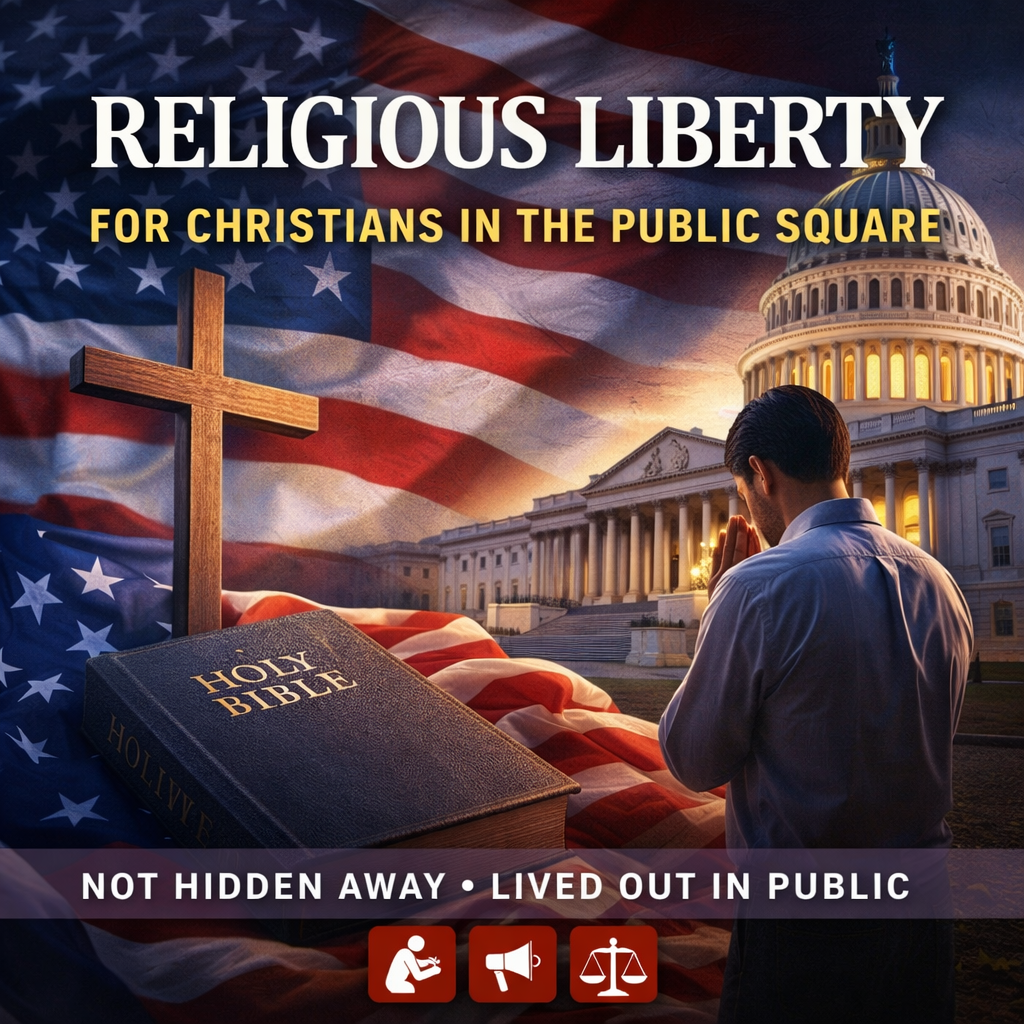
Religious Liberty In The Public Square
Religious liberty was never meant to be a hidden thing kept safe in private belief. The First Amendment protects public witness – the right to pray openly, to act on conscience, and to speak moral truth in the marketplace of ideas. When believers retreat, the public square becomes quieter and less free.
Letting religious freedom become only defensive litigation narrows our vision to survival. Courts and legal fights are vital, but they are not the whole story. Faith built only on courtroom victories is faith that fears the light.
True religious liberty is exercised daily by people who serve, vote, legislate, and pray with conviction. When elected officials let prayer and conscience guide them, they are not breaking the Constitution – they are practicing it. Pastors who preach on public issues are fulfilling a role Scripture calls them to, not committing a crime.
Over the past decade, hundreds of Christians have stepped into public life without abandoning their beliefs. Their presence changes culture because it refuses the modern temptation to check faith at the door. That persistence alarms those who hoped faith would fade from civic life.
The fight is not merely to protect churches from vandalism – it is to protect a way of life that sees work and worship blended. If believers withdraw from schools, hospitals, and government, the culture loses a voice that has stewarded charity and moral clarity for generations. Hostility grows when that voice grows silent.
Visibility matters. When faith is lived with humility, courage, and consistent love, it disarms critics and reshapes neighborhoods. That kind of witness is a practical argument for religious liberty because it proves the social good of faith in public life.
If hostility is rising it is, paradoxically, because faith is advancing rather than retreating. The more believers live their convictions openly, the more the pushback intensifies. That should not surprise anyone who reads Scripture; standing firm has always drawn opposition.
The choice ahead is simple: retreat and concede the public square, or stand and risk conflict while offering a hopeful, transforming presence. Christians are called to faithfulness, not convenience. And faith that refuses to retreat will meet resistance – and by God’s grace, will also bear fruit.