

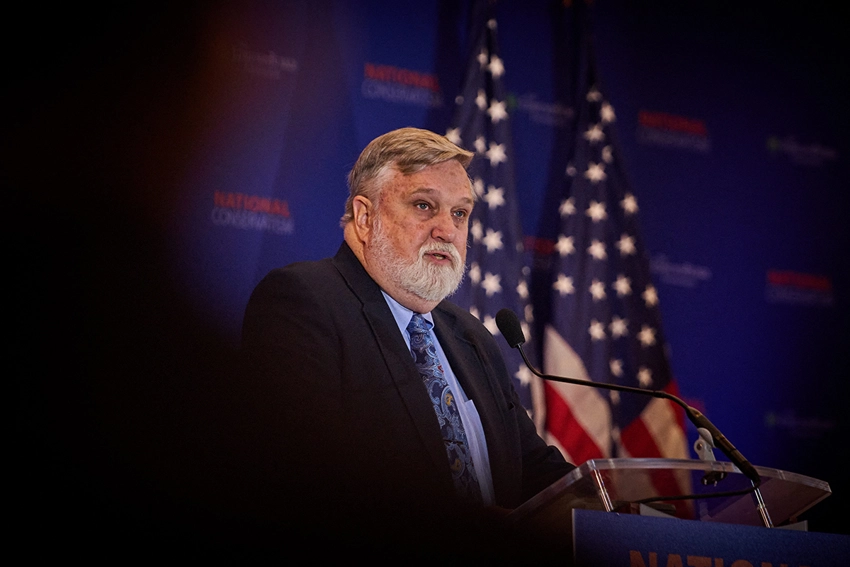
Pastor Douglas Wilson stepped into controversy after leading a worship moment at a Pentagon service in Arlington, Virginia, and he did not shrink from the pushback. He publicly pushed back on concerns that a prayer in a government space automatically breaks the Constitution. His stance is clear: prayer is neither a secret nor a crime when it calls people to God.
Wilson, the senior pastor of Christ Church (CREC) in Moscow, Idaho, delivered a sermon last Tuesday at the request of Secretary of War Pete Hegseth, who has attended the church plant of Wilson’s denomination, the Communion of Reformed Evangelical Churches (CREC), in Washington, D.C.
A Biblical Defense
Wilson frames his action as obedience, plain and simple, rooted in a biblical sense of mission rather than a political stunt. From that vantage point, the church does not stop at the doors of buildings owned by the state; believers are called to bring faith into the public square. He argues that praying before leaders and institutions is an ancient, biblical practice meant to shape consciences, not to coerce law.
The pastor insists public prayer is an act of witness, not domination, and that distinction matters theologically and legally. When Scripture urges believers to pray for rulers, it envisions petitions that humble the heart and bless the common good. For Wilson, silence in the face of opportunity amounts to surrendering the gospel’s civilizing force.
This is not a surrender to power or a grab for control; it is a reminder that the fear of God should shape how authority is exercised. A robust biblical witness will always push back against cruelty, corruption, and the abuse of office. Prayer, in his telling, is the first, not the last, line of moral resistance.
Constitutional Questions And Public Worship
Critics say government spaces must stay strictly neutral, and that concern deserves respectful engagement. Wilson and his defenders respond by distinguishing private religious exercise from state endorsement, arguing the mere presence of prayer does not equate to an official religious test. The legal line is contested, but the argument made here is that voluntary worship does not automatically become an establishment.
He points out that the Constitution protects religious speech and practice, which includes the ability of citizens and invited guests to pray. That protection does not erase legitimate debates about optics and good governance, yet it does mean Christians are not legally barred from offering prayer where public life happens. For Wilson, a ban on such prayer would be a deeper moral error than any awkward headline.
Practical critics worry about blurring church-state boundaries and alienating those of other faiths or none at all. Wilson responds that genuine prayer respects others, is offered humbly, and can accompany invitations to serve people of all stripes. He claims that when prayer is loving and public, it can be a bridge rather than a wedge.
The conversation quickly spins into labels—some call it Christian nationalism and others call it prophetic witness—and words become weapons. Wilson rejects being boxed into slogans and insists the discussion should return to gospel clarity and common decency. He wants to reframe the debate: this is about the church fulfilling its calling, not about seizing political power.
The controversy will not end with headlines, and it should push both church and state to reflect on how faith lives publicly with integrity. For believers who read Scripture as binding, public prayer in civic spaces is a moral obligation when done with humility and love. The wider question now is whether civil society will let those faithful acts be a part of civic life without mistaking them for compulsory allegiance.
#DougWilson #PeteHegseth #Pentagon #Christiannationalism