

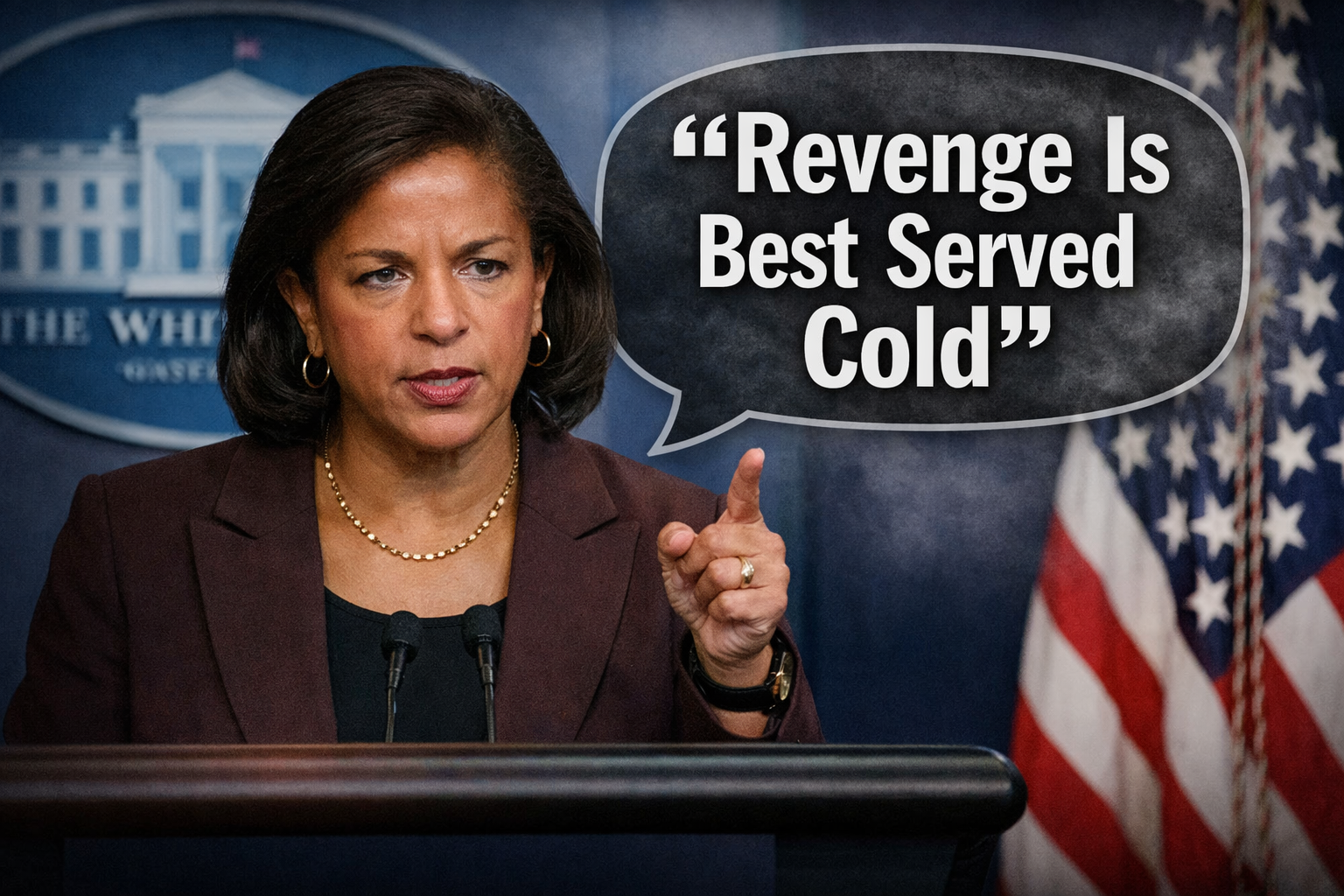
WASHINGTON, D.C. — In remarks that have ignited fierce debate across the political spectrum, Susan Rice, Director of the White House Domestic Policy Council, issued a sharply worded warning to voters, corporate leaders, and government appointees aligned with President Donald J. Trump’s 2024 electoral victory.
Rice invoked the adage “revenge is best served cold,” telling a Democratic interviewer that she increasingly sees merit in that philosophy as related to the political fortunes of those who supported Trump and his agenda. Her comments were recorded February 19 and have circulated widely online.
Rice — a former high-ranking official in the Obama administration — framed her remarks within a broader critique of what she termed “corporate interests, law firms, universities, and media” that backed Trump or declined to resist his influence. She suggested these institutions could face consequences if Democrats regain political power.
“When it comes to the elites… it’s not going to end well for them, for those that decided that they would act in their perceived very narrow self-interest,” Rice stated in the interview, which has now become a flashpoint in conservative media.
The core of Rice’s remarks has been portrayed by conservative commentators as a vow to pursue punitive actions — including subpoenas or legal pressure — against private and public actors who “took a knee” to Trump’s ascendancy. Many critics argue that such rhetoric resembles political retribution rather than governance.
This assessment is echoed in social media reactions. One post on the platform X referenced Rice’s statement directly:
📌 Susan Rice Threatens Trump Supporters: ‘Revenge Is Best Served Cold’ — implying that punishment might follow political choices.
Meanwhile, conservative discussion forums have interpreted Rice’s comments as emblematic of a broader resentment within Democratic elites toward voters who backed free-market and populist policy agendas. One Reddit thread emphasized the perceived threat: critics there suggested that targeting millions of Americans for supporting Trump amounted to an authoritarian impulse to punish dissent rather than persuade.
Republican figures have seized on the controversy. Former President Donald J. Trump went further, issuing demands that Netflix remove Rice from its board of directors or face unspecified “consequences” — connecting corporate leadership to partisan politics.
Rice’s remarks arrive at a politically charged moment, shortly after key policy battles and judiciary decisions that have underscored partisan divisions in Washington. Conservative activists argue that the rhetoric reflects a Democratic tendency to equate political disagreement with disloyalty or malfeasance.
Supporters of Rice and other Democrats, for their part, have attempted to downplay the aggressive phrasing. They maintain that “accountability” for government officials and insiders is legitimate, citing investigations into actions taken during past administrations. But opponents argue that framing such accountability as “revenge” erodes public trust and fuels polarization.
On X, one conservative commentator responded to Rice by stressing the danger of political elites declaring war on citizens for their votes — stating that “vengeance language in the public square is corrosive and antithetical to liberty.”
Even within corporate circles, some executives are reportedly uneasy. Messaging from Rice’s camp — coupled with talk of corporate consequences for failing to resist Trump — has heightened anxiety among business leaders who traditionally prefer to steer clear of incendiary political conflicts.
Observers point out that Rice’s comments mark a departure from traditionally measured policy speech from White House officials. Instead, her use of evocative language like “revenge” echoes more combative political rhetoric typical of grassroots campaigning rather than sober governance.
From a conservative perspective, this shift underscores broader concerns that the Democratic Party’s leadership may be embracing punitive strategies to pressure opposition, rather than seeking bipartisan solutions on pressing issues such as border security, inflation, and judicial integrity.
Critics contend that framing political engagement in terms of retribution alienates millions of American voters who view their electoral choices as legitimate exercises of democratic rights — not provocations warranting retaliation.
Rice’s remark that revenge becomes wiser with age has been widely circulated beyond mainstream news outlets, with memes and reposts proliferating on platforms like Instagram.
To supporters of the Trump movement, the controversy reinforces long-held notions that elite Washington figures harbor ill will toward grassroots conservatism and populist reforms. This episode is likely to feature prominently in campaign narratives as both sides gear up for the 2026 midterm and 2028 presidential contests.
Whatever one’s ideological perspective, Rice’s provocative phrasing and subsequent political fallout illustrate the deep divides in current American political discourse. Conservatives argue that such rhetoric threatens democratic norms by framing governance as a vehicle for partisan retribution rather than public service.
It also raises substantive questions about how high-level officials should communicate about opponents — particularly when their words reverberate across millions of Americans who see political identity as inseparable from civic legitimacy.