

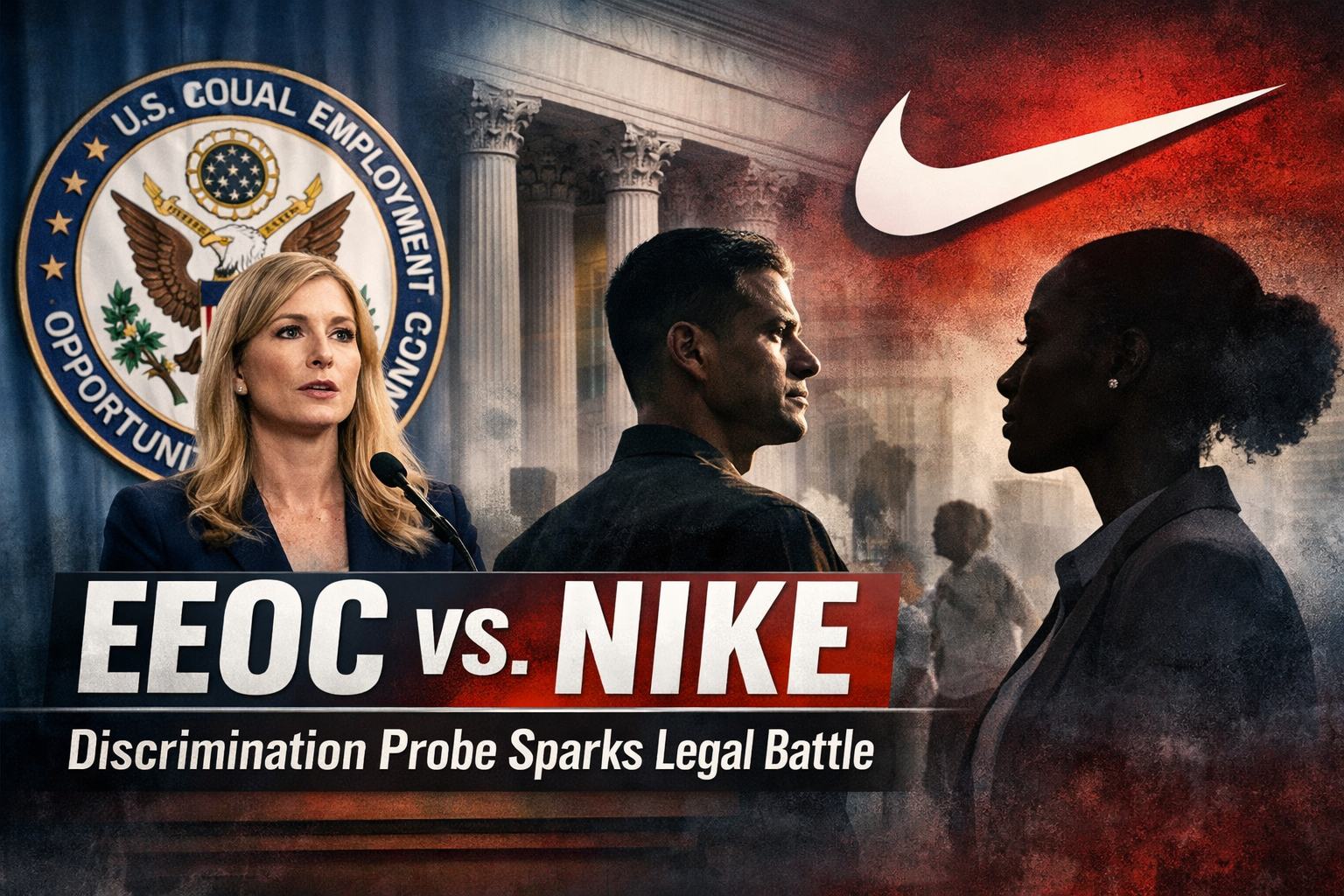
EEOC Files Subpoena Enforcement Action Against Nike Over Alleged Discrimination Against White Workers
The U.S. Equal Employment Opportunity Commission (EEOC) has escalated its investigation into Nike, Inc., filing a subpoena enforcement action in federal court amid allegations that the athletic apparel giant discriminated against white employees, applicants and training-program participants.
The action, filed this week in the U.S. District Court for the Eastern District of Missouri, comes after Nike failed to fully comply with the agency’s earlier subpoena seeking extensive internal records tied to Diversity, Equity and Inclusion (DEI) programs and workforce decision-making.
EEOC Chair Andrea Lucas — appointed by President Donald Trump — said the subpoena enforcement action was necessary to “fully and comprehensively investigate” what the agency describes as “systemic allegations of DEI-related intentional race discrimination.”
According to the EEOC’s court filing, the agency is examining whether Nike engaged in “a pattern or practice of disparate treatment against white employees, applicants and training program participants” in decisions relating to hiring, promotions, demotions, layoffs, internships, mentoring and leadership development programs.
The requested records include internal criteria used to select workers for layoffs, documentation on how race and ethnicity data is collected and utilized, and details of at least 16 programs alleged to have limited participation based on race.

Allegations and Legal Basis
The EEOC’s allegations are grounded in Title VII of the Civil Rights Act of 1964, which makes it unlawful to discriminate in employment on the basis of race, color, religion, sex or national origin. The agency’s filing contends that Nike’s DEI-related objectives and targets — including goals to increase minority representation in certain workforce segments by 2025 — may have produced unintended or unlawful race-based employment outcomes disadvantaging white workers.
Under Title VII’s “color-blind” standard, the EEOC asserts that programs and practices that consider race as a determining factor in employment choices can violate federal law, even if described in the language of “representation” or “equity.”
While Nike has been voluntary in part, the EEOC says the company did not produce all materials the agency subpoenaed last year, prompting the court action.
Nike Response and Corporate Position
Nike has described the EEOC’s actions as an “unusual and surprising escalation,” saying it has cooperated with the agency by providing thousands of pages of documents and detailed responses to inquiries. The company insists it “follows all applicable laws” prohibiting discrimination and believes its policies and practices are consistent with its obligations under federal civil-rights statutes.
In a statement to reporters, Nike emphasized its willingness to continue discussions with the EEOC and to meet “good-faith” requests for information. Company representatives have argued that many of the agency’s subpoenas are overly broad and that discussions could yield productive clarification without court intervention.
Broader Context: Federal Scrutiny of DEI
The Nike case is one of the most prominent examples to date of federal enforcement action challenging corporate DEI programs on legal grounds. It follows similar EEOC and U.S. Department of Justice investigations into whether organizations’ diversity initiatives unlawfully disadvantage non-minority workers.
Andrea Lucas has made scrutiny of DEI efforts a central priority for the EEOC, underscoring a broader regulatory shift under this administration aimed at enforcing Title VII equally across all races — including white workers historically overlooked in discrimination enforcement conversations.
Legal analysts note that while DEI goals and outreach efforts are not inherently unlawful, they can potentially cross legal boundaries if they result in race being used as a determining factor in employment decisions rather than a consideration.
Conservative Commentary on the Action
Conservative commentators and labor law experts have applauded the EEOC’s pursuit of enforcement, saying it underscores the importance of equal treatment under civil-rights law. This view holds that DEI initiatives must be carefully structured to avoid creating unintended biases or reverse discrimination, particularly in hiring, promotion, and layoff decisions where individual merit ought to be the guiding principle.
Some legal observers view the Nike case as a warning to corporate America: agencies will actively enforce the letter of Title VII against any employer whose policies — even well-intended ones — result in discriminatory effects on the basis of race.
Looking Ahead
With the subpoena enforcement action now before a federal judge in Missouri, court filings and arguments in the coming weeks are expected to shape how far the EEOC can probe corporate DEI policies and the types of evidence employers must produce in such investigations.
The case is likely to influence how major firms design and implement diversity initiatives going forward, balancing lawful nondiscrimination principles with broader workforce inclusion goals.