

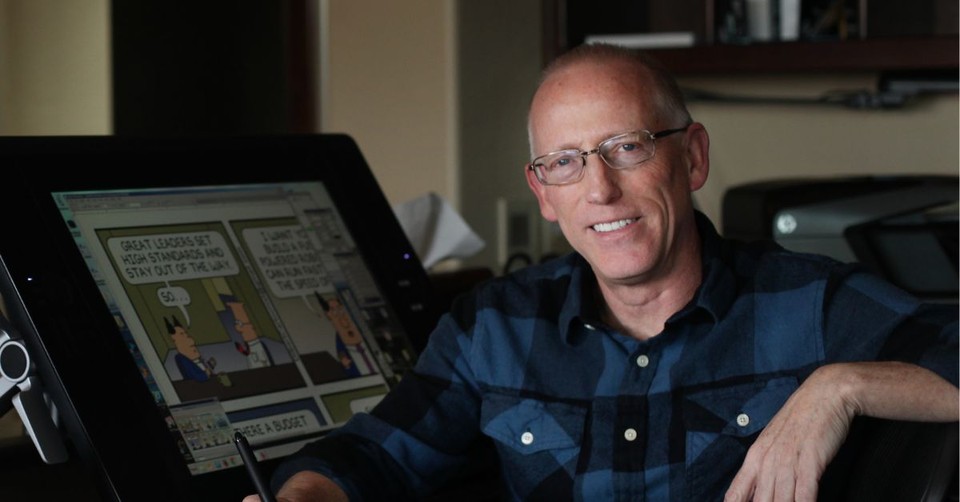
Dilbert Creator Scott Adams Accepted Jesus Before Dying, Posthumous Letter Says
Scott Adams, the cartoonist behind Dilbert, left a last letter that has stirred conversations about faith and eternity. Facing metastatic prostate cancer, he wrote openly that he accepted Jesus Christ as his Lord and Savior in the days before his death. For Christians this is the clearest kind of hope: a public statement about the one thing that matters most beyond the grave.
A Final Letter And A Turning
Adams’ farewell is candid and personal, and it reads like a man accounting for his life and choices. “If you are reading this, things did not go well for me. I have a few things to say before I go,” he wrote, and then proceeded to assure readers he was of sound mind as he set down his last wishes.
He described his body failing while his mind remained clear, and he insisted there was no coercion shaping his decisions. He wrote plainly about estate matters and then moved to the heart of the matter: faith.
“Next, many of my Christian friends have asked me to find Jesus before I go,” he wrote. “I’m not a believer, but I have to admit the risk-reward calculation for doing so looks attractive. So, here I go: I accept Jesus Christ as my lord and savior, and I look forward to spending an eternity with him. The part about me not being a believer should be quickly resolved if I wake up in heaven. I won’t need any more convincing than that. And I hope I am still qualified for entry.”
Those lines, printed exactly as he placed them, have been shared widely and taken seriously by Christians who pray for the lost. Adams also spoke on video in the days before he died, explaining that followers had urged him to convert and that he respected those who try to win others to Christ. He said it was his plan to convert, and that he believed it was never too late.
For believers, Adams’ decision is a reminder that salvation rests in grace through faith and that confession with the mouth is a public echo of an inward change. It does not erase complexities from his life or the debates that followed his career, but it does point to a final turning toward the Gospel. The Bible is clear: repentance and trust in Jesus bring forgiveness and new life.
What This Means
This moment invites sober reflection: public figures can influence culture for good or harm, but the offer of Christ is the same for everyone. Adams’ plea to readers to “pay it forward” and be useful echoes the practical fruit Christians are called to produce after receiving grace. He closed with, “I had an amazing life. I gave it everything I had,” which reads like a humble passing of a torch to those who remain.
Whether you knew Adams for a comic strip or for his outspoken views, his last words center on eternity and the choice each person faces. For Christians, the natural response is prayer and thanksgiving for a sinner turned to the Savior. For those who are not yet convinced, his letter stands as an invitation to examine the claims of Christ and the promise of new life.
At a time when culture often shrugs at matters of faith, a public profession like this cuts through the noise and asks a simple question: what will you do with Jesus? The Christian hope is that no one is beyond the reach of God’s grace, and Scott Adams’ closing testimony will be read by many as evidence that the Gospel still changes hearts, even in the final hours.